
In a world constantly adapting to digital advances, businesses must keep up to date in order to maintain a competitive advantage and success. An organisation taking full advantage and operating at the forefront of this digital evolution, while simultaneously disrupting the accommodation industry as we know it is; Airbnb.
Regarded by Forbes (2018) as a ‘profitable unicorn’, the digital platform lists over 5 million accommodations across 81,00 cities globally but is ran by just 13,000 employees (AllTheRooms, 2020). Profit for 2020 is forecasted to be approximately $8.5 billion (Much Needed, 2020).
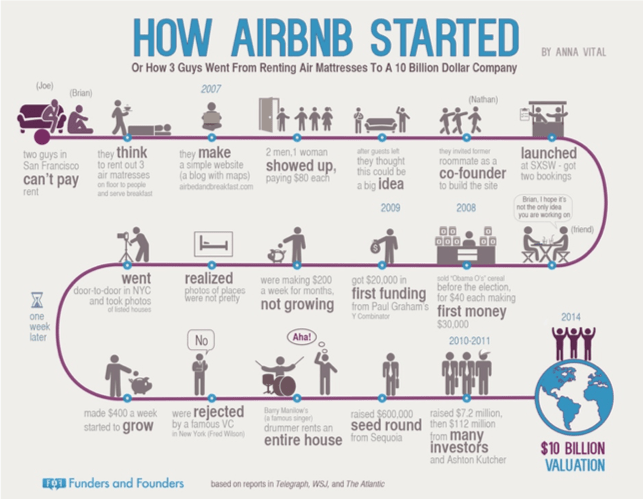
The organisation’s digital business model has largely contributed to its success, made possible by the rise of the sharing economy (Bhojane, 2018). Driven mainly by accessibility through technology and the millennial generation, the sharing economy is continuing to grow in popularity as a budget and environmentally friendly system (Forbes, 2019). The Airbnb platform utilises a peer-to-peer (p2p), two-sided marketplace structure where ‘hosts’ can make money by not only listing their private homes to other users worldwide but also gain revenue from promoting local specialised experiences and adventures.

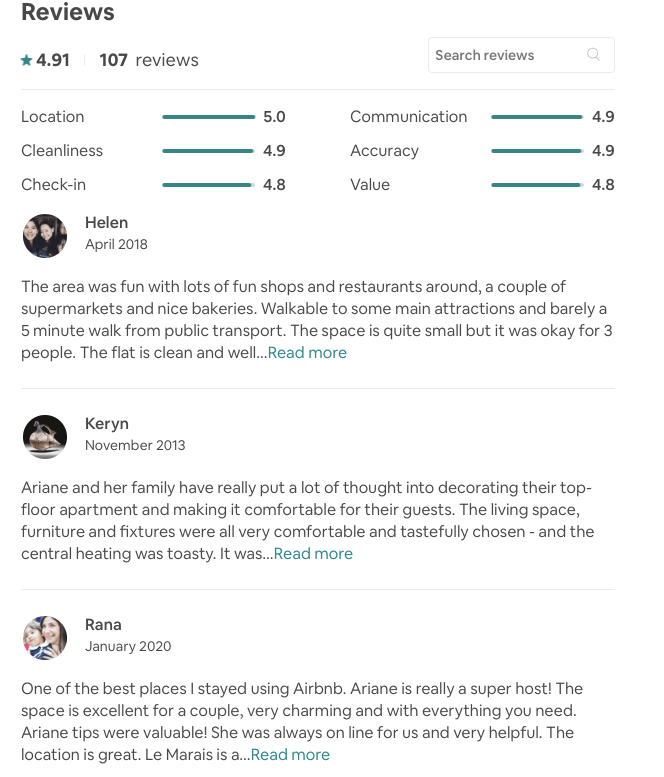
I have used the Airbnb multiple times as a guest and beyond the convenience of the digital platform, there are 3 main factors the model offers that have arguably added to its success.
1) Trust
At the root of Airbnb’s success is trust. As a minimum, the platform ensures secure payments, a necessity when paying a large sum of money upfront. But trust is also achieved through online reviews, a concept not unique to the organisation, as similar to sites like ‘Tripadvisor’ and ‘Booking.com’ users can leave comments and feedback to recommend stays to other guests. In my opinion trust is the most important factor; I never book an accommodation or experience online without first studying pages of reviews, but this even more important if I am staying at a ‘stranger’s’ house. This feedback is undoubtedly important for the success of Airbnb, especially for intangible services like unique ‘experiences’ that pose high levels of perceived risk to the consumer who cannot test or trial before purchase. To address this, hosts are digitally monitored on the platform over 12month periods and can achieve a ‘super-host’ status based on their ratings and response rates (Airbnb, 2020b). I myself tend to look for this status when making a booking.
Take some time to watch the following TedxTalk by Joe Gebbia, the co-founder of Airbnb, on designing for trust between guests and host. Pay particular attention to the discussion of reputation and disclosure from 8.30 minutes onwards and consider how trust is achieved on the platform from both sides of the p2p marketplace.
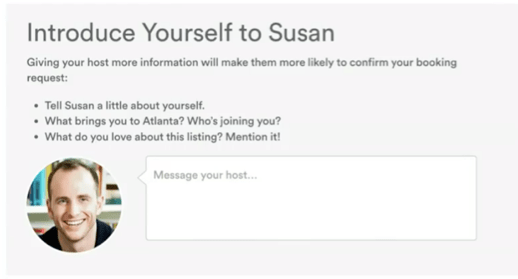
Unique to the p2p model Gebbia talks about the importance of building trust from both sides and discusses the how disclosure of the optimal amount of information via the platform can achieve this. Users are prompted to provide sufficient details to the hosts before they can be accepted, something I have done numerous times to reassure the homeowner that I am a quiet and tidy guest! All users and hosts are also rated after reservations to hold individuals accountable on the platform to form strong or weak reputations (Airbnb, 2020).
2) Communication
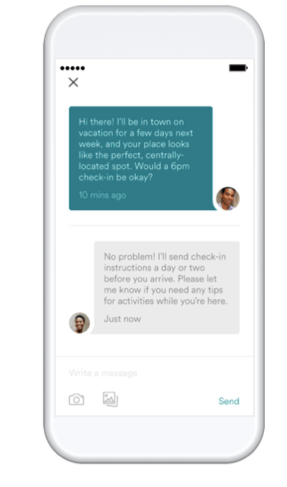
The second factor within the digital business model that contributes to the organisation’s success is the ease of communication between hosts and guests. As an extension of the ‘introduce yourself’ interaction, users can also directly message and call on the platform. This not only continues to strengthen the trust between hosts and guests by letting the peers get to know each other outside of their profiles and reviews but also provides an element of support and help. I remember getting locked out of my Airbnb rental at 1am a few summers ago in Barcelona- I messaged my host on the app and within 20 minutes they arrived to help!
3) Personalisation
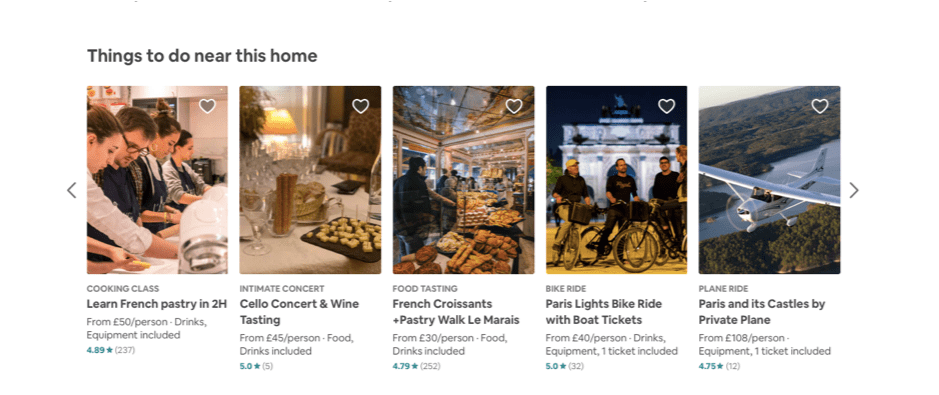
The final factor, personalisation, offers users recommendations for experiences based on the local area of a booked accommodation and the user’s data history. The use of a digital platform allows the organisation to monitor users and recommend experiences based on intensity and recency of clicks on other experience links (Grbovic, 2019).
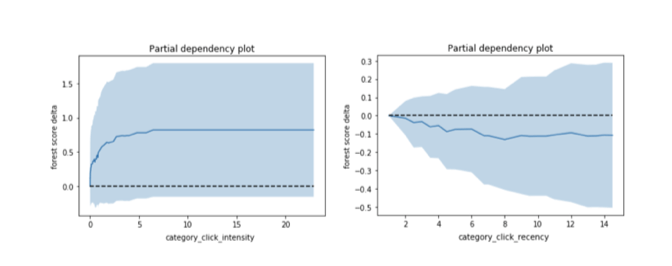
This function allows for convenient and tailored navigation for each user that enhances their customer experience (Hyken, 2017). Booking a trip can be overwhelming and I have found this feature to really simplify the whole process and introduce authentic, exciting opportunities to experience the area I am staying.
The Harvard Business review outlined key reasons how p2p marketplace platforms can fail to deliver success for an organisation:
- Failure to gain enough users
- Failure to develop trust
- Failure to focus on both sides of the p2p platform
Considering this, it is reasonable to assume that the p2p digital platform business model has significantly contributed to airbnb’s success, enhancing the trust, communication and customer experience for both guests and host – gaining over 150 million current users (Much Needed, 2020). There is little doubt, as technology and the digital world continues to expand, along with growing investment into the sharing economy, that Airbnb will thrive even further in the future.
Sources
- Airbnb. (2020). Airbnb Trust & Safety – Your safety is our priority. Retrieved 3 March 2020, from https://www.airbnb.co.uk/trust
- Airbnb. (2020b). How do I become a Superhost? | Airbnb Help Centre. Retrieved 4 March 2020, from https://www.airbnb.co.uk/help/article/829/how-do-i-become-a-superhost
- AllTheRooms. (2020). Airbnb: An Analyst’s Guide (Part 1) – AllTheRooms Analytics. Retrieved 3 March 2020, from https://www.alltherooms.com/analytics/airbnb-ipo-going-public-revenues-business-model-statistics/#airbnbbusinessmodel
- Bhojane, A. (2018). Less is Now More. The Rise of the Shared Economy. Retrieved 3 March 2020, from https://medium.com/datadriveninvestor/the-less-is-new-more-the-rise-of-the-shared-economy-5f128e4fb06e
- Forbes. (2019). Council Post: The Sharing Economy Is Still Growing, And Businesses Should Take Note. Retrieved 4 March 2020, from https://www.forbes.com/sites/forbeslacouncil/2019/03/04/the-sharing-economy-is-still-growing-and-businesses-should-take-note/#32c436b84c33
- Forbes. (2018). As A Rare Profitable Unicorn, Airbnb Appears To Be Worth At Least $38 Billion. Retrieved 3 March 2020, from https://www.forbes.com/sites/greatspeculations/2018/05/11/as-a-rare-profitable-unicorn-airbnb-appears-to-be-worth-at-least-38-billion/#4c107c9e2741
- Grbrovic, M. (2019). Machine Learning-Powered Search Ranking of Airbnb Experiences. Retrieved 3 March 2020, from https://medium.com/airbnb-engineering/machine-learning-powered-search-ranking-of-airbnb-experiences-110b4b1a0789
- Harvard Business Review. (2019). A Study of More Than 250 Platforms Reveals Why Most Fail. Retrieved 4 March 2020, from https://hbr.org/2019/05/a-study-of-more-than-250-platforms-reveals-why-most-fail
- Hyken, S. (2017). Recommended Just For You: The Power Of Personalization. Retrieved 4 March 2020, from https://www.forbes.com/sites/shephyken/2017/05/13/recommended-just-for-you-the-power-of-personalization/#15d08cb36087
- Much Needed. (2020). Airbnb by the Numbers: Usage, Demographics, and Revenue Growth. Retrieved 3 March 2020, from https://muchneeded.com/airbnb-statistics/
 The Digital Exchange
Hi Laura, a very nice blog! The rapid development and expansion of Airbnb reflects the general trend of the e-commerce era, and its success has made it a model student for the sharing economy business Became the frame of reference for this type of startup. Many times, some ideas that are not understood by people at the beginning but these ideas may change our lives. It is important to stick to them. Airbnb’s success today is exactly what it does, but with the development of this type of business model in the future, there may be more games on the legal level with other conflicts of interest.
LikeLike
I agree with your statements that with the rise of the sharing economy, the peer-to-peer digital business model used by Airbnb has helped the company to achieve outstanding achievements. However, we cannot ignore the Airbnb platform is still difficult to keep consistency in different regions, such as employees have difficulty verifying the information provided by the house in other countries. According to statistics in Australia revealed that 35% of Airbnb listings are by people who don’t even own the property.
https://www.news.com.au/news/illegal-airbnb-subletting-exposed/news story/7313a9518e70ac066b3a395340d11a60
There is no doubt that tourist housing is a big cake, which means that digitalization will have a significant impact on the industry. To maintain its leadership in the industry, Airbnb may need to strengthen information verification systems. For now, Airbnb is more focusing on one side of the p2p platform, not both.
LikeLike
This blog post was great! I really enjoyed reading it! I agree, businesses must continually update to maintain their competitive advantage and continue to thrive. I also think, when creating digital business models (or any business model), environmental, social and political contexts are key. I would be interested to find out how Airbnb is faring during this Coronavirus pandemic. Although not a profit-making opportunity, some Airbnb hosts are offering their property to NHS workers fighting coronavirus for free (Hewitt, 2020) and Airbnb is fully refunding bookings that cannot be made due to the pandemic (Lothian-McLean, 2020). In contrast, some Airbnb hosts are vocally moaning that Airbnb are not covering their costs and thus are struggling to pay their own bills (Lothian-McLean, 2020) – I wonder if these individuals will no longer use Airbnb to show their anger?
References
Hewitt, R. (2020, March 25). Coronavirus: Belfast landlord offers Airbnb free to NHS and urges others to do same. Belfast Telegraph. Retrieved from https://www.belfasttelegraph.co.uk/news/health/coronavirus/coronavirus-belfast-landlord-offers-airbnb-free-to-nhs-and-urges-others-to-do-same-39073768.html
Lothian-McLean, M. (2020, March 26). Airbnb hosts are moaning about coronavirus costing them money but no one is sympathetic. indy100. Retrieved from https://www.indy100.com/article/coronavirus-airbnb-landlords-mortgages-london-rent-affordable-housing-9427231
LikeLike