As this Digital Business Models module draws to an end, I look back on this unique learning process and the knowledge and skills I have acquired. I admit that I was initially skeptical of an online module but after interacting with learners around the world in the first week MOOC course I knew I was going to thoroughly enjoy it.
The MOOC and ELE content
I found the MOOC course a refreshing and eye-opening method of learning, that I plan to continue to use in the future. The content was insightful and brought my attention to themes such as the fourth industrial revolution and ‘intelligence augmented’ (IA) vs AI.
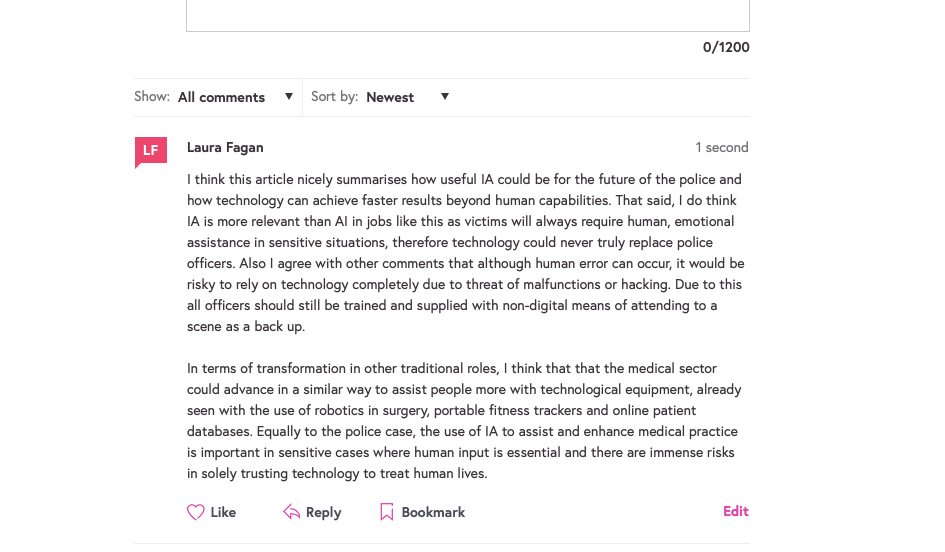
The encouragement to comment on the MOOC pushed me to consider my own opinion about this article and the use of IA in the police instead of passively reading about the topic. I found that taking other user’s ideas into account offered further depth to my learning and allowed me to consolidate my ideas, in this case with previous comments on treating technology with caution.
Job Roles in the Digital Economy
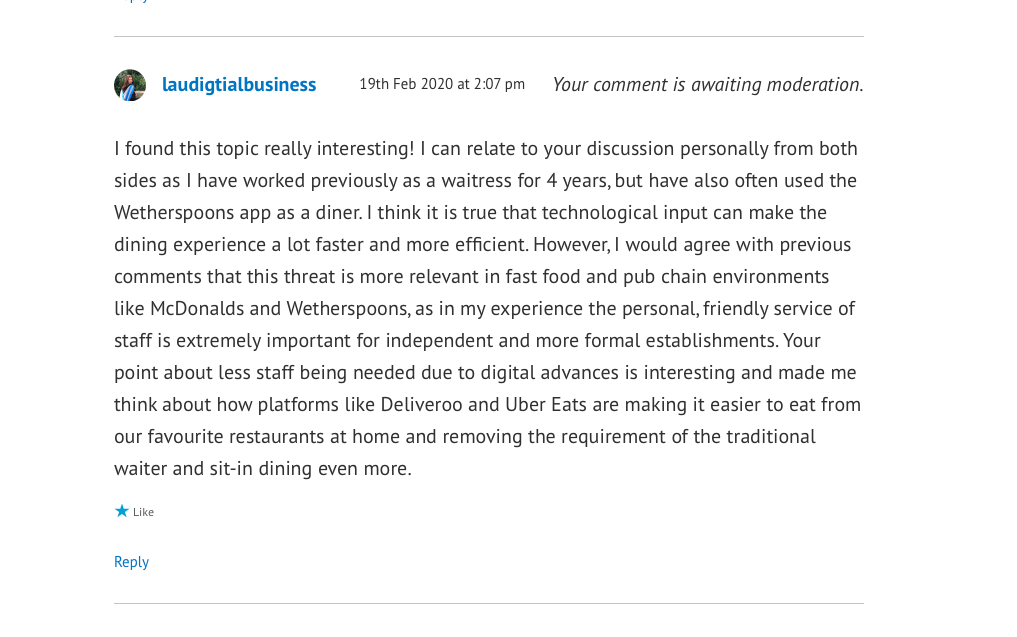
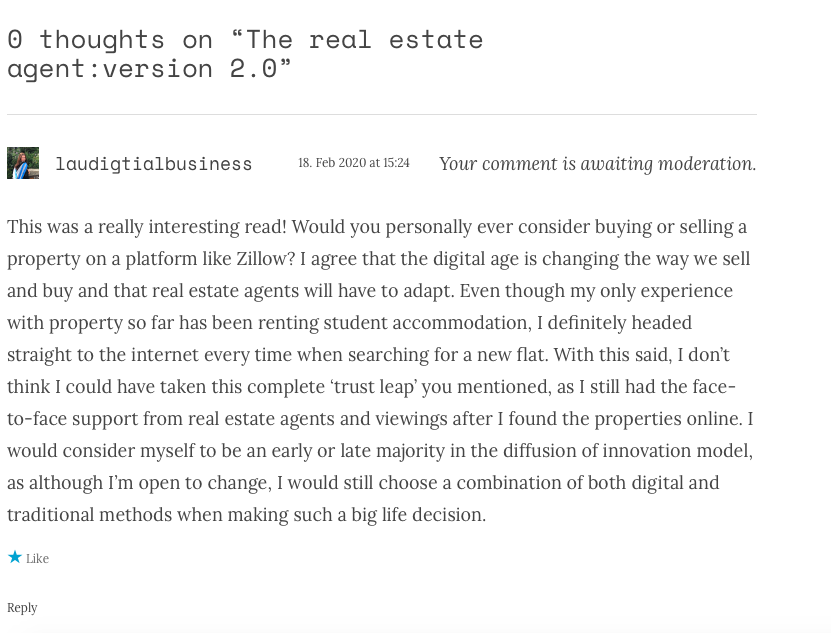
I was inspired from my experience on the MOOC to debate the extent to which teaching has adapted in the digital economy. Alternatively, The Digital Hunt taught me about technology heightening the efficiency of dining but also depersonalising service. OSoDigital’s discussion about the changing role of a real estate agent opened my eyes to the level of trust technology holds in society, with people committing to a great life decision like buying a house through an app! Contributing my own opinion to both posts expanded my understanding of digital disruption but also pushed me to acknowledge that whilst the digital world is rapidly reshaping and advancing many industries, human interaction will always be essential to specific roles, in my opinion at least.
Digital Business Models
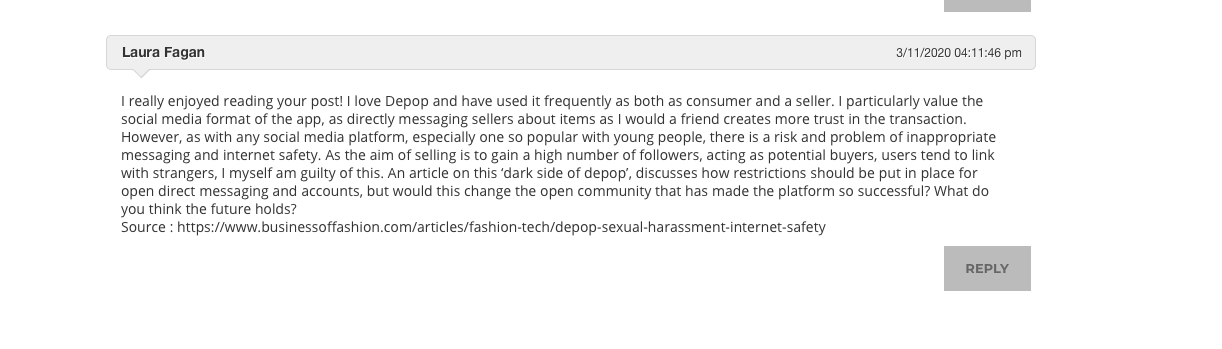
Learning more from my peers about how different organisations have thrived through their digital business models widened my understanding of the ELE content and my own research. I particularly enjoyed Hannah’s explanation of Glossier’ success and discovered more about a retailer on the winning side of online shopping. Carrie‘s post on Depop provided an example of success within the sharing economy but also motivated me to consider the ‘darkside’ of digital marketplaces and further recognise the theme of privacy and ethics from Week 10.
What’s next?
The video below highlights the 5 key future steps i have learnt from this module!
In a world constantly adapting to digital advances, businesses must keep up to date in order to maintain a competitive advantage and success. An organisation taking full advantage and operating at the forefront of this digital evolution, while simultaneously disrupting the accommodation industry as we know it is; Airbnb.
Regarded by Forbes (2018) as a ‘profitable unicorn’, the digital platform lists over 5 million accommodations across 81,00 cities globally but is ran by just 13,000 employees (AllTheRooms, 2020). Profit for 2020 is forecasted to be approximately $8.5 billion (Much Needed, 2020).
The organisation’s digital business model has largely contributed to its success, made possible by the rise of the sharing economy (Bhojane, 2018). Driven mainly by accessibility through technology and the millennial generation, the sharing economy is continuing to grow in popularity as a budget and environmentally friendly system (Forbes, 2019). The Airbnb platform utilises a peer-to-peer (p2p), two-sided marketplace structure where ‘hosts’ can make money by not only listing their private homes to other users worldwide but also gain revenue from promoting local specialised experiences and adventures.
I have used the Airbnb multiple times as a guest and beyond the convenience of the digital platform, there are 3 main factors the model offers that have arguably added to its success.
1) Trust
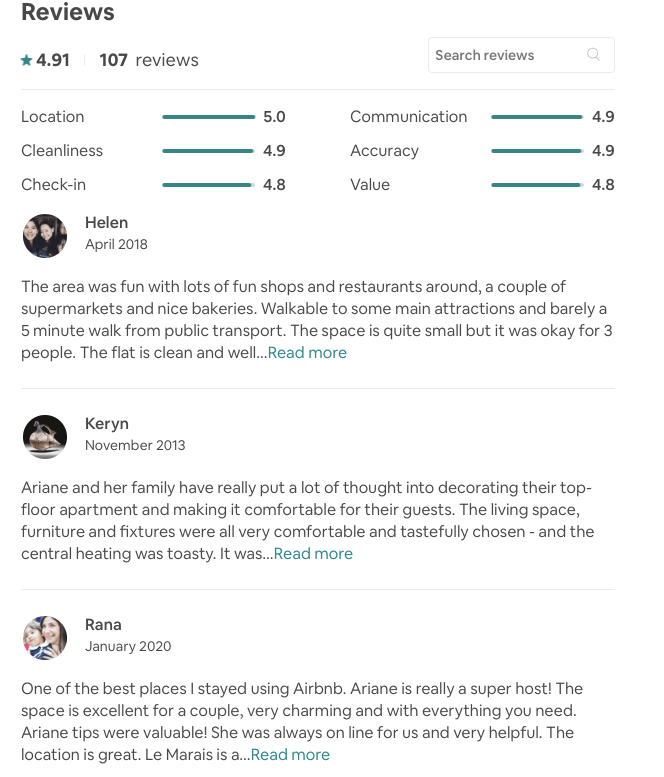
At the root of Airbnb’s success is trust. As a minimum, the platform ensures secure payments, a necessity when paying a large sum of money upfront. But trust is also achieved through online reviews, a concept not unique to the organisation, as similar to sites like ‘Tripadvisor’ and ‘Booking.com’ users can leave comments and feedback to recommend stays to other guests. In my opinion trust is the most important factor; I never book an accommodation or experience online without first studying pages of reviews, but this even more important if I am staying at a ‘stranger’s’ house. This feedback is undoubtedly important for the success of Airbnb, especially for intangible services like unique ‘experiences’ that pose high levels of perceived risk to the consumer who cannot test or trial before purchase. To address this, hosts are digitally monitored on the platform over 12month periods and can achieve a ‘super-host’ status based on their ratings and response rates (Airbnb, 2020b). I myself tend to look for this status when making a booking.
Take some time to watch the following TedxTalk by Joe Gebbia, the co-founder of Airbnb, on designing for trust between guests and host. Pay particular attention to the discussion of reputation and disclosure from 8.30 minutes onwards and consider how trust is achieved on the platform from both sides of the p2p marketplace.
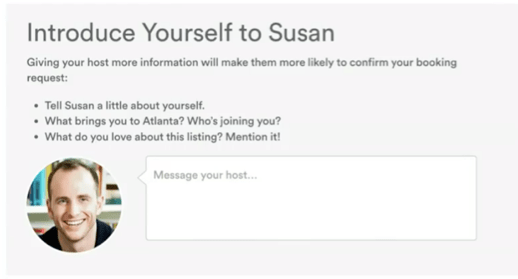
Unique to the p2p model Gebbia talks about the importance of building trust from both sides and discusses the how disclosure of the optimal amount of information via the platform can achieve this. Users are prompted to provide sufficient details to the hosts before they can be accepted, something I have done numerous times to reassure the homeowner that I am a quiet and tidy guest! All users and hosts are also rated after reservations to hold individuals accountable on the platform to form strong or weak reputations (Airbnb, 2020).
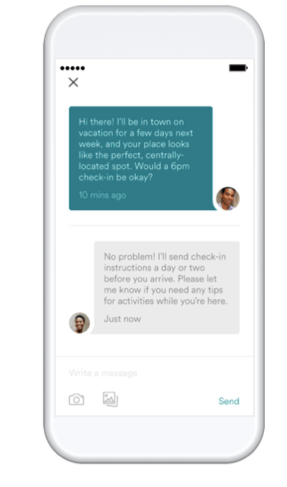
The second factor within the digital business model that contributes to the organisation’s success is the ease of communication between hosts and guests. As an extension of the ‘introduce yourself’ interaction, users can also directly message and call on the platform. This not only continues to strengthen the trust between hosts and guests by letting the peers get to know each other outside of their profiles and reviews but also provides an element of support and help. I remember getting locked out of my Airbnb rental at 1am a few summers ago in Barcelona- I messaged my host on the app and within 20 minutes they arrived to help!
3) Personalisation
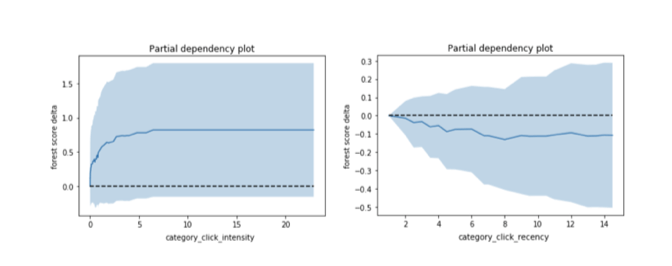
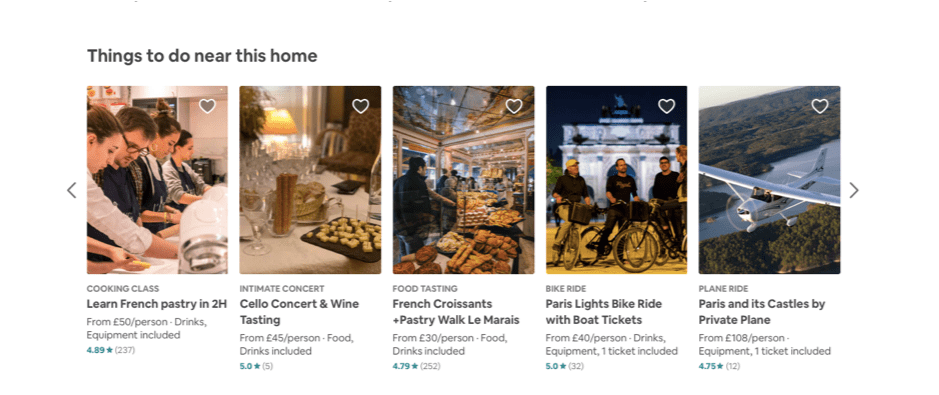
The final factor, personalisation, offers users recommendations for experiences based on the local area of a booked accommodation and the user’s data history. The use of a digital platform allows the organisation to monitor users and recommend experiences based on intensity and recency of clicks on other experience links (Grbovic, 2019).
This function allows for convenient and tailored navigation for each user that enhances their customer experience (Hyken, 2017). Booking a trip can be overwhelming and I have found this feature to really simplify the whole process and introduce authentic, exciting opportunities to experience the area I am staying.
The Harvard Business review outlined key reasons how p2p marketplace platforms can fail to deliver success for an organisation:
Failure to gain enough users
Failure to develop trust
Failure to focus on both sides of the p2p platform
Considering this, it is reasonable to assume that the p2p digital platform business model has significantly contributed to airbnb’s success, enhancing the trust, communication and customer experience for both guests and host – gaining over 150 million current users (Much Needed, 2020). There is little doubt, as technology and the digital world continues to expand, along with growing investment into the sharing economy, that Airbnb will thrive even further in the future.
Sources
Airbnb. (2020). Airbnb Trust & Safety – Your safety is our priority. Retrieved 3 March 2020, from https://www.airbnb.co.uk/trust
Take a minute to think about your time in education. For most people in the UK this time lasts at least 12 years, almost 2 decades for a postgraduate student. In an age of rapid technological advances, a lot can change in this seemly short period of time- fast forward to today and I am learning a University module through an online MOOC course and engaging with my educator using my own digital blog.
The digital economy is a concept that takes into account the shift in big data, online platforms, and hyper-connectivity (Deloitte 2020). Nicholas Agar (2017) discussed how many job roles seem ‘eminently and imminently’ replaceable in this economy, the question is could a career in teaching fall victim to this threat too or will there always be needs within learning that only human interaction can fulfil?
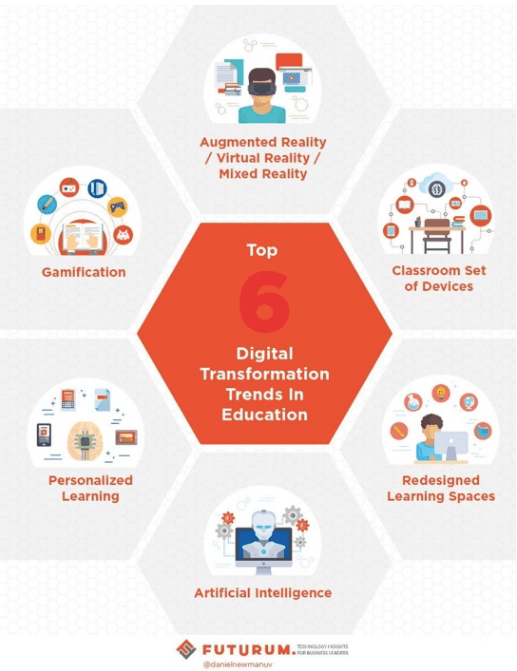
The role a teacher plays in learning has changed substantially already in the digital economy, with various examples outlined below.
Although all of these trends are becoming increasingly relevant in a digital age, redesigned learning spaces are a transformation that have sparked considerable debate in the extent to which the teachers in the future will become increasingly obsolete.
On the most part, if there is a skill or topic you want to learn you can usually find a suitable course or app online to achieve this. I am attempting to learn a new language and have re-downloaded an app that I was first introduced to by my teacher to use alongside revision for GCSE’s. This is an example of how digital developments have worked in harmony with formal educators. John Swinney, the Cabinet Secretary of Education in Scotland, discussed the importance of this harmony in enriching the learning experience and supporting teaching (Smarter Scotland, 2016). He also added a valuable point of, especially in today’s age, the importance of familiarity and understanding of the digital world in setting students up for the future.
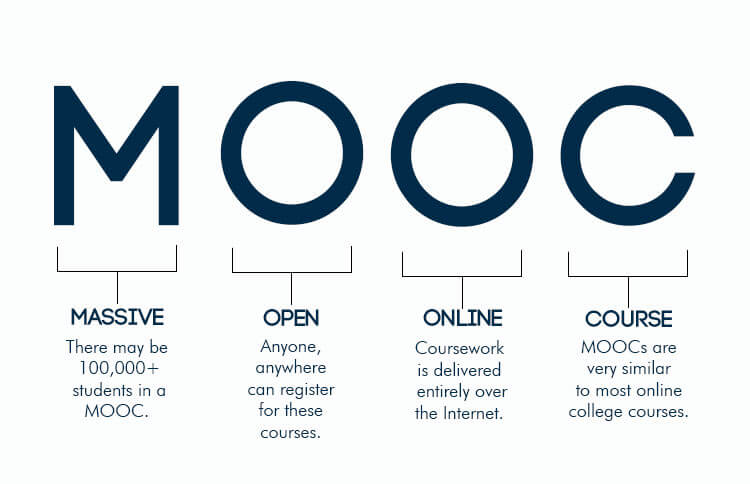
For education at degree level, over 80 Universities similar to Exeter have partnered up with Massive Open Online Courses (MOOCs) on the platform ‘Future learn’ to provide students with an independent and accessible way to enhance their learning either for short courses or entire degrees. The use of MOOCs remove the role of face-to-face teaching and instead offer students the ability to peer assess and interact with educators online through quizzes and comments (Belleflamme and Jacqmin, 2016).
On a more extreme scale, establishments like the ‘Open University’ (OU) have further disrupted the role of the traditional educator by offering learners a digital distance University experience off campus. With over 2 million students, the OU is the largest University in the UK and a leader for flexibility and innovation. Even primary and secondary educators are facing change with the popularity of a similar platform ‘InterHigh’ which offers interactive online ‘classrooms’ for children as young as 8. The interest in these platforms highlights future power to further challenge traditional classroom teaching.
I question whether traditional teaching methods in formal education will ever change completely. Pappano (2012) claimed that the future of education would be dominated by digital learning and MOOC platforms, as its interactive and collaborative nature provides an experience beyond the classroom. But are these redesigned learning spaces really a threat to traditional careers in formal education? An article by the Guardian (2018) shone a light on the downfalls of the Open University and the failures of its ‘depersonalised’ approach in acutally achieving successful graduation rates compared to institutions using more traditional direct approaches.
With this in mind, take some time to watch and consider the ideas discussed in this TedxTalk on the positive influence of MOOCs in the higher education University system.
‘There is no one size fits all for teaching and learning’. This suggestion in the talk offers a new way of thinking for the changing role of educators in the digital economy. It is not necessarily a question of the digital world replacing the traditional one, but simply that MOOCs are offering the opportunity for a new form of teaching that Universities should be supporting alongside face-to-face methods. A continued collaboration between traditional and digital learning may be a more appropriate projection for the future of teaching
So what does the future hold? The role a teacher holds in education will continue to adapt and be enhanced by digital learning spaces, especially in higher education. There is no doubt that as we move forward digital and traditional teaching will develop to work together to enhance the learning experience using platforms like MOOC and online communities. My answer to whether these platforms will dominate the career role is that it is unlikely due to the fundamental need for many students, myself included, for the structure and stability that only human guidance can offer.
Sources:
Agar, N. (2019). How to be human in the digital economy (p. 4). Cambridge, Mass: The MIT Press.
Belleflamme, P., & Jacqmin, J. (2015). An Economic Appraisal of MOOC Platforms: Business Models and Impacts on Higher Education. Cesifo Economic Studies, 62(1), 148-169.
Hello, my name is Laura and I am currently studying an MSc in Marketing at the University of Exeter. I am originally from a small town near Liverpool in the North west of England, but have lived and studied in Exeter now for 3 and a half years. Before my masters, I previously completed a BSc in Psychology, as I have always been fascinated by social behaviour. This has undoubtedly aided my interest and understanding of Marketing and Consumers.
As part of my ‘Digital Business Models’ module this term, my blog will primarily focus on the evolving world of digital business and how marketing is being transformed by technology. I chose this module because I am intrigued by both the challenges and opportunities that digital advancements pose for not only for businesses but for society too. I also acknowledge the importance of developing my understanding of this digital evolution in order to prepare me for a future career as an aspiring Marketer.
Welcome to my blog! I hope you enjoy my upcoming posts, please feel free to leave any comments!







 The Digital Exchange